In Smithville, Texas, like many rural communities across the country, summer is meant to be a time for families to slow down and spend time together. But for many parents and caregivers, summer also brings worries about how to keep fridges full when school is out.
The Hidden Reality of Summer Hunger in Rural Texas
At first glance, Smithville might not look like a place where families are struggling. But as Candy Biehle, the district’s child nutrition director, explains, the reality is often hidden.
“There are hungry children in Smithville, Texas,” she said. “You might think everything looks fine, but when you really get into the community, you see there’s a lot of need.”
For families like Kristal Webster’s, a mom of three, that support makes a difference in everyday moments.
“I am always worried that it's not going to be enough,” she said. “They’re going to look at me like, well mom, what’s for dinner tonight?”

For Kelli Snyder, a mom of six, the pressure is familiar.
“Every family is feeling the financial strain recently and just wonders how are we going to pay for this, how are we going to buy this when we need it,” she said.

Overcoming Transportation Barriers with Grab-and-Go Meals
For families in Smithville, the challenge is not just about cost. It is about the constant mental load of making sure their kids have enough. Traditional summer meal programs often require families to be in one place at a set time. In rural communities like Smithville, that can be a barrier. Parents are working, transportation is limited and distances can be long.
Biehle has spent years working closely with families and understands how easily children can fall through the cracks, especially during the summer months. That reality is what led Smithville to expand its summer meals program through a grab-and-go model, allowing families to pick up multiple days of meals at once and bring them home.

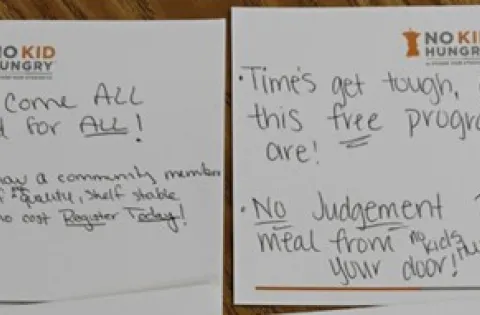
Grab-and-go meals help remove some of these barriers. Instead of having to sit down at a meal site, families can pick up food a few times a week and bring it home, making it possible to fit meals into difficult and busy schedules.
“We are working, and we are busy,” Webster said. “The fact that we can pick up the meals and take them home, it’s more convenient.”
Empowering the Community and Local Teens
Biehle sees just how transformative this program has been. “Once we began doing the grab-and-go, I don’t have to worry about a child inside a house without food. I know they have food.” The benefit goes beyond supporting families and their kids. Biehle has also hired local high school students to work in the program. They benefit from receiving pay, gaining experience and serving the community they love.
“My parents or my dad grew up here, and I've always done stuff like this my entire life,” Sheldon Epizona, a high school worker, shared. “So it's not something that's really new to me. But of course, I want to continue to do stuff like this for the rest of my life. It's always good to give back. If life's being good to you, I'm very blessed, and life has given me lots of gifts and beautiful things throughout life, and I love to give back in the slightest bit.”

Filling the Gap Amid Rising Grocery Costs and SNAP Reductions
Grab-and-go summer meals are crucial for families at this moment. The price of groceries continues to rise, and between reductions to SNAP at the federal level and the veto of the Summer EBT program by the Texas governor, families are struggling to make ends meet.
“I go [to the grocery store] every two weeks, and it's no less than $400,” Webster said. “It's just impossible. There's been times since it's summer, I have spent close to $600. But I'm like, they have to eat. Prices are going up. Summer meals help my finances tremendously. They fill in that gap throughout the day so I can plan for dinner. They’re full. They’re not saying, ‘I’m still hungry.’ They get so excited. It’s something so simple, but it’s exciting for them.”
The Immediate Impact of Consistent Nutrition for Kids
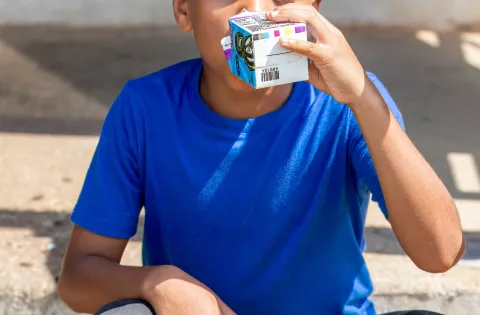
For kids, the impact is immediate.
“I feel happy when I eat those meals,” said Eliana, a second grader who dreams of becoming a firefighter, a ballerina and a police officer.

Biehle sees what happens when children do not have access to consistent meals during the summer.
“Without that food in the summer, we would have children who would be very low energy. Their brain is only thinking about food and when am I going to get my next meal,” she said.
That is what these programs protect. Not just access to meals, but the ability for kids to focus. Not just food, but the ability to grow, learn and simply be a kid.
And sometimes, the impact comes down to a single moment. Biehle remembers a young boy waiting for the meal van.
“He said, ‘I knew you would be here. I have been so hungry all weekend,’” she said.
That moment is why the work continues. Behind every meal is a parent trying to provide, a family making difficult decisions and a child who deserves to feel secure and cared for.
Leaders like Biehle and her team are working every day to make sure families in Smithville are not left to face this alone. But they cannot do it without support.

By investing in programs like grab-and-go summer meals, we can help more parents put food on the table, ease the daily pressure families carry and ensure that children have what they need to grow and thrive. Together, we can support the people doing this work on the ground and help more families have one less worry this summer.
Partnering to Expand Summer Food Access
No Kid Hungry can't do this work alone. We partner with organizations and companies that are just as committed to investing in kids and vital programs as we are. Since 2016, Albertsons Companies Foundation and their Nourishing Neighbors initiative have provided nearly $10 million in support of No Kid Hungry and have been a vocal champion in helping end summer hunger. From July 1-7 of this year, the Foundation is running a generous $250,000 match campaign to support No Kid Hungry.