
Every day, kids across America come to school having not eaten a healthy meal — or having eaten nothing at all. The solution is breakfast served during the school day, preferably in the classroom before instruction begins. School meals are at the heart of No Kid Hungry's work to end child hunger.
Wes Parker is a second grade teacher in Arlington, Virginia. “I used to hear kids complaining about being hungry, and I never hear that now,” he said after his school began serving breakfast in the classroom. “It’s very hard to think about other things when your stomach is telling you that you need food, so it has made a huge difference.”
The No Kid Hungry campaign helps educators and lawmakers across the country with the guidance and funding they need to make school breakfast a regular part of the day for students. Some of the ways we help:
- Funding for schools. Though the cost of free school meals is paid by the federal government, schools need help to operate successful meals programs, from the refrigerators in their kitchens to the cooler bags and carts needed to deliver meals to classrooms.
Grants from No Kid Hungry help pay for these critical needs. We’ve provided millions of dollars in grant funding to school districts and organizations working to feed kids across the U.S. You can see No Kid Hungry grants that went to schools in your community. - Advocating for kids. We advocate for stronger school meals programs in states across the country. Working with our local partners, we’ve helped make breakfast part of the school day in districts from California to New York.
- Research and training. To help more communities feed kids, we created the No Kid Hungry Center for Best Practices - a team of analysts, researchers and program experts - who study what works best, then share those ideas far and wide so that everyone working to feed kids has the resources, support and know-how they need.
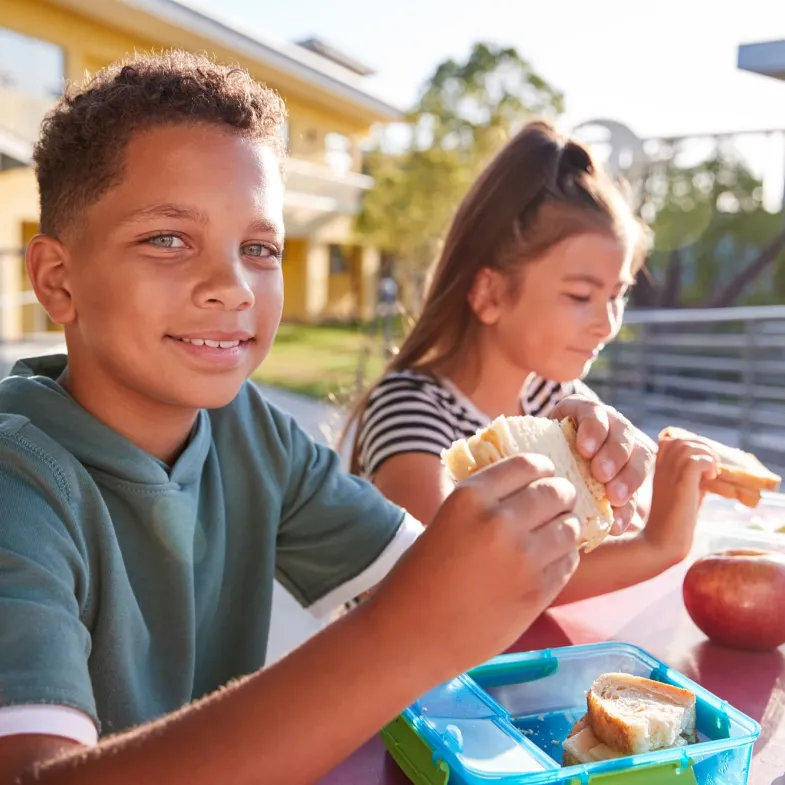
No Kid Hungry has helped millions more children start their day with a healthy school breakfast. But the work isn’t done.
Just over half of the children who eat free and reduced-price lunch at school also eat school breakfast due to barriers that stand in the way. For kids and families, these are issues like complicated applications, stigma and the challenge of getting to school early enough to eat before class. For schools and administrators, it’s paperwork and costs.
Today we’re focused on increasing kids’ participation in school breakfast by providing flexible grants to schools to help them pay for resources they need to launch or expand their school breakfast programs. These are things like equipment required to serve food, outreach to students and families, and providing resources and training to schools, districts and state agencies that administer the programs.
"If I could use one word to describe school breakfast, it would be 'blessing'," said Oscar Troncoso, a school principal in El Paso, Texas. "It’s a blessing for our students. It’s a blessing for our community."
Learn more about the ways you can help kids facing hunger or make a donation today.